WhatsApp Chatbot for Business: Features, Benefits & Use Cases
Someone messages your business at 9 pm asking if a product is in stock. By the time you reply the next morning, they've bought from someone else. A WhatsApp chatbot for business fixes this by replying instantly, at any hour.
What is a WhatsApp chatbot?
It's software that chats with your customers on WhatsApp. It answers simple questions, collects details, and passes the chat to a real person when things get complicated. Most businesses run one through the WhatsApp Business API.
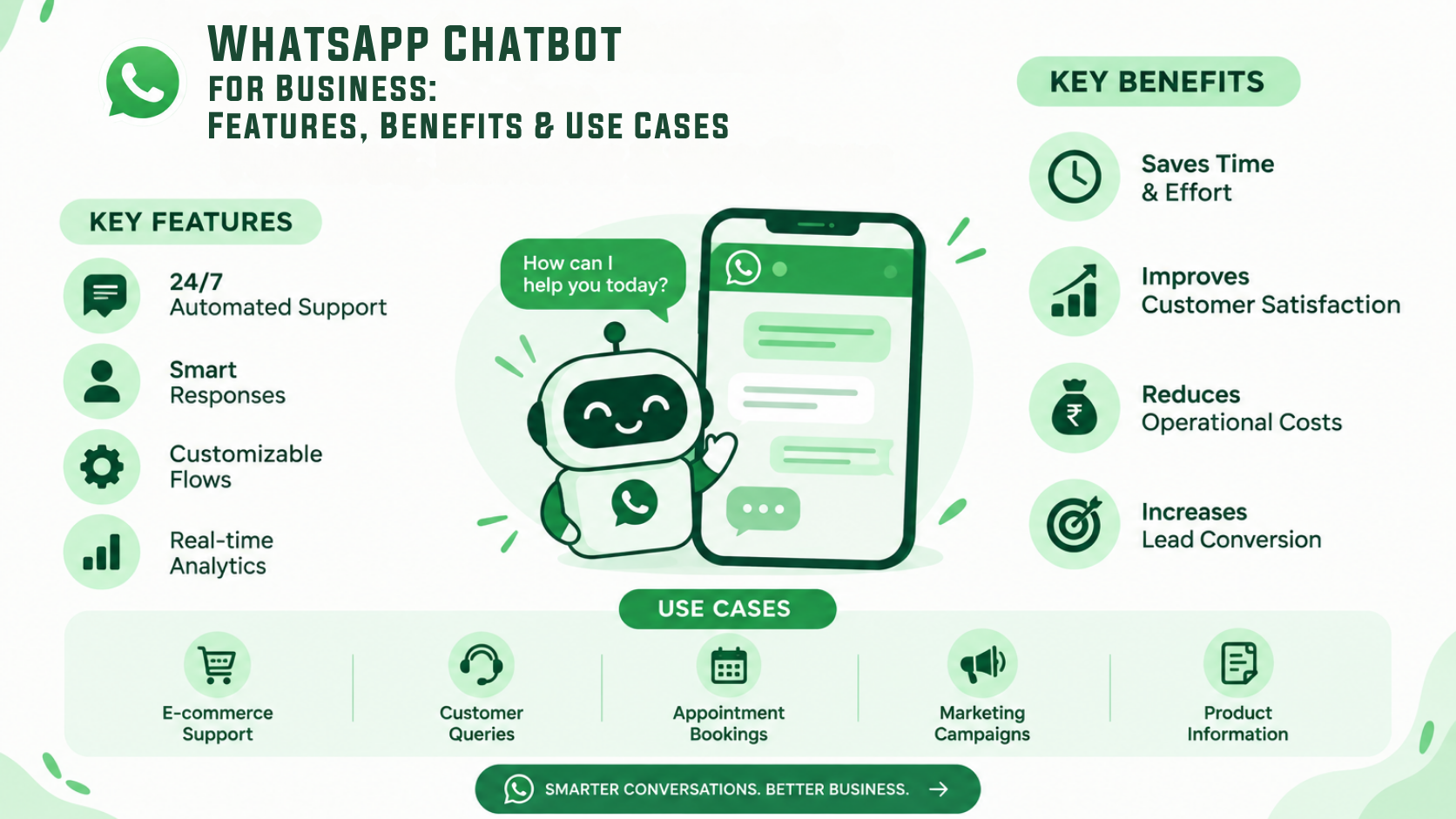
Key features
- Instant replies to common questions
- Menus and buttons, so customers tap instead of type
- Lead capture (name, phone number, budget)
- Handover to a human agent
- Message templates for updates and reminders
- CRM and tool integration
- Multiple languages
Benefits
- Faster replies: the first useful answer usually wins the customer
- Less repetitive work: your team handles the chats that need a human
- Fewer lost leads: people get answers while they're still interested
- 24/7 availability: no night shift needed
- Easy to scale: busy sale days won't overwhelm your team
Use cases
- Support: answers on timings, pricing, delivery, and order status
- Lead generation: asks a few questions and passes the lead to sales
- Order updates: confirmations and shipping alerts
- Appointments: booking, confirming, and reminders
- Follow-ups: a nudge when an enquiry goes quiet
Mistakes to avoid
- Don't trap people in loops. Always offer a real person.
- Keep replies short.
- Only message people who opted in.
- Test the bot yourself before launch.
Do you need one?
Probably, if you answer the same questions all day, leads go cold, or several people share one number. For a handful of messages a day, the free WhatsApp Business app is enough.
Final thoughts
A chatbot won't replace your team. It takes the repetitive work off their plate so they can focus on the conversations that matter. Start small, then add more as you learn what customers ask.